
19 Northside Youth Become Owners of Hawthorn Crossings
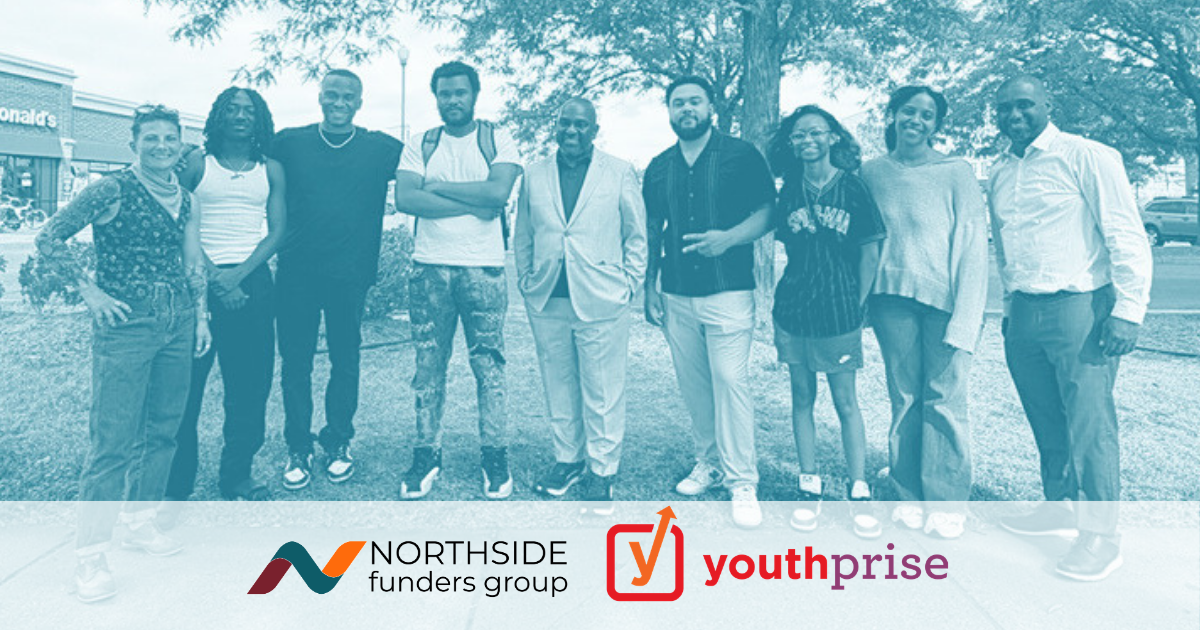
Cameron Jackson grew up witnessing the rise and legacy of his stepfather, Richard Copeland—whose business became one of the largest Black-owned enterprises in the community and whose leadership established him as a pillar of North Minneapolis.
“His example showed me that business ownership can be more than a vehicle for individual success; it can create jobs, strengthen neighborhoods, build wealth, and give a community greater ownership over its own future,” Cameron says.
Now, through a unique partnership between Northside Funders Group (NFG) and Youthprise, Cameron is a partial owner of North Minneapolis real estate himself.
For years, Northside residents have watched developers come and go on West Broadway without much say in what got built, who owned it or who got access to it. In June, NFG learned about an effort from Chicago-based TREND Community Development Corporation to purchase and revitalize Hawthorn Crossings, the shopping center at 902-1030 West Broadway Avenue.
For five years and counting, NFG’s focus has been to support local developers in North Minneapolis by providing flexible catalytic dollars to their projects. If you hang out on the Northside, you might recognize some of the projects we’ve invested in: The Zarah, Tap In Kitchen and Cocktails, Satori Apartments and some projects yet to be completed like The Resolute, Swank Eatery and Kirk’s Café. We believe in homegrown talent and ensuring people from the Northside build the Northside.
So when we were approached about potential funding for the Hawthorn Crossings project, we did bring some skepticism to the table. But when we learned the model included community ownership shares our interest was piqued. TREND's model, already used in Chicago, Baltimore and Columbus, Ohio, invites nearby residents to invest as little as $1,000-$2,000 and collectively own up to 49% of the property.

As the deal seemed near closing, NFG wanted to make sure that young people, like Cameron, didn’t have another experience of watching development come in—without their involvement. So we teamed up with Youthprise to facilitate ownership shares for 19 Northside youth, ages 18 to 25.
"This is a perfect example of the unique value-add NFG plays in the funding ecosystem in North Minneapolis,” E Coco, Managing Consultant for NFG said. “We may not grant large amounts, but we do infuse resources in creative ways to support strategies or approaches that would otherwise go untested. That's the real power of funder collaboratives and intermediaries—not to be gate keepers, but to facilitate creativity."
A Corridor Already in Motion
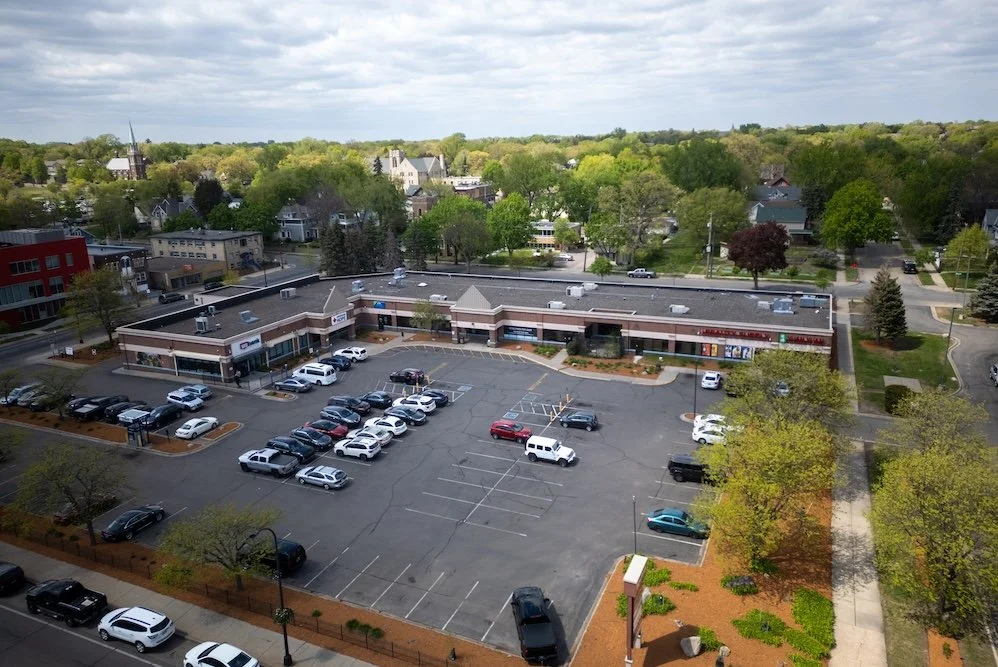
The timing isn't an accident. Hawthorn Crossings sits in a neighborhood that's roughly half Black, compared to just 19% citywide, and has gone decades without the kind of investment other parts of Minneapolis take for granted. And this site is critical: The African American Leadership Forum's Northside Forward plan, a $1.5 billion, ten-year vision for the area, names the Hawthorn Crossings site as one of its primary growth points.
Walk a few blocks in either direction and the evidence of homegrown entrepreneurship is apparent. TRI-Construction, the Black-owned firm Calvin Littlejohn and Lester Royal started in 2001 with tools loaded into a pickup truck, now runs its headquarters out of a renovated building at 927 West Broadway. Kenya McKnight-Ahad's ZaRah Center has already put 20 Black women business owners under one roof in the state's first Black-owned holistic wellness complex. Teto Wilson, who's run his barbershop on West Broadway for years, is turning the old 4th Street Saloon into Swank Eatery, an $11 million food hall that will house seven locally owned businesses.
Almost directly across the street from Hawthorn Crossings is NEON’s $22 million Collective Kitchens food incubator and the $68-million Satori Village development is going up next door. So it's easy to see why organizers felt they couldn't wait to get young people into the ownership conversation. The money moving onto West Broadway right now is the kind that, historically, hasn't circled back to the neighborhoods it moved through.
Ownership as the Curriculum
Both NFG and Youthprise have spent years trying to get young people closer to real decision-making power rather than just program participation. Our Northside Youth Enrichment Fund puts young people in charge of reviewing and awarding money to youth programs on the Northside. At Youthprise, half of the governing board members are 16 to 25 years old.
The Hawthorn Crossings partnership pushes that commitment even further. Instead of learning about assets and wealth-building in a classroom, the 19 young owners will hold an actual stake in a commercial property on their own street, with the training on asset-building, financial literacy and shared responsibility built around that ownership rather than separate from it. Organizers describe it as teaching young people what it means to own something collectively — and what it takes to look after it once you do.
Lyneir Richardson, founder and CEO of TREND CDC, has made a similar point about adult investors in the project. People who have a stake in a shopping center, he told CBS Minnesota, tend to "patronize and protect and respect it in a different way" than people who don't. NFG and Youthprise are betting that lesson lands even deeper when it starts before someone turns 25.
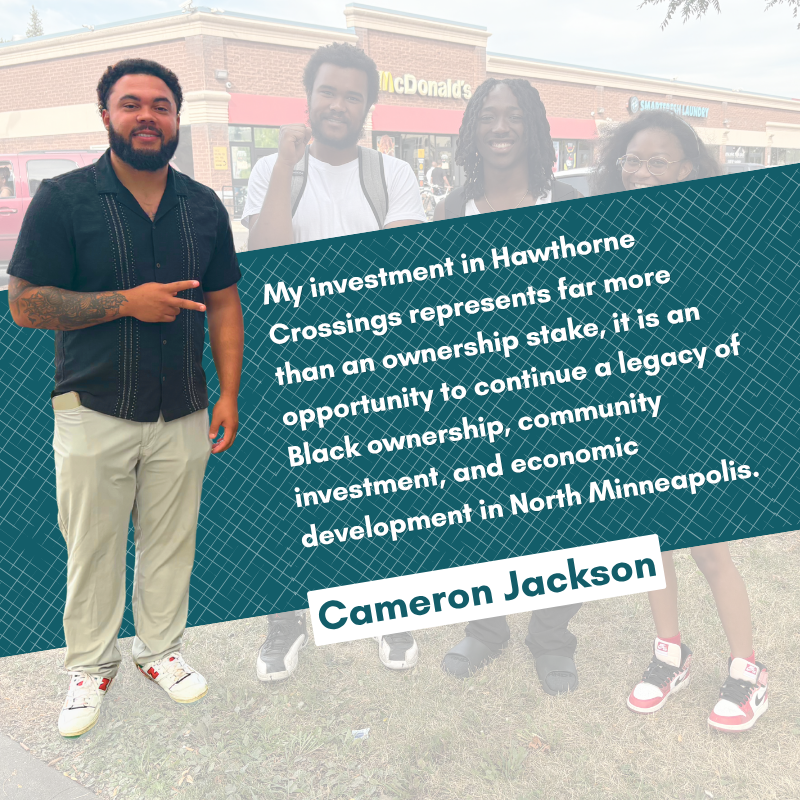
“My investment in Hawthorne Crossing represents far more than an ownership stake, it is an opportunity to continue a legacy of Black ownership, community investment, and economic development in North Minneapolis,” Cameron said. “Today, I am working to build upon that foundation through my own path in community service, law, and real estate. My long-term aspiration is to become a real estate developer and investor capable of bringing these disciplines together to create projects that generate both strong economic returns and meaningful community impact. Through TREND and Lynair Richardson, the funding that enabled me to acquire shares in Hawthorne Crossing provides an important first step toward that vision, moving me from aspiring to participate in development to having an ownership stake in the economic future of the community I serve.”
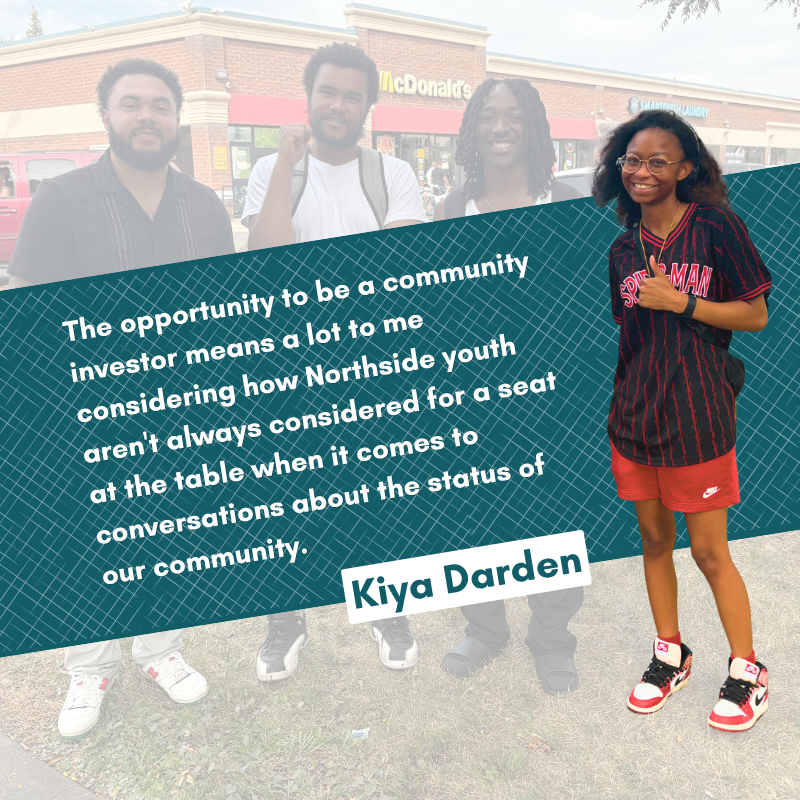
Kiya Darden, another youth owner, echoed that sentiment. “The opportunity to be a community investor means a lot to me considering how Northside youth aren't always considered for a seat at the table when it comes to conversations about the status of our community,” she said. “To not only be considered as a valued opinion but also a partial owner of a space we continually interact with is really cool to me.”
TREND has said the Hawthorn Crossings model could eventually expand to a dozen similar shopping centers nationally—which means whatever NFG and Youthprise figure out here won't just apply to one building on one street. If the youth ownership piece works, it becomes something other cities — and other TREND projects — could and we think, should, replicate.